Do you offer free consultations?+
Yes. Initial consultations are free and confidential, by phone or in person at our West New York, NJ office. Call 1-833-NY-NJ-LAW or send the form on this page.
What areas do you serve?+
Our office is at 440 65th Street, West New York, NJ. We represent clients throughout New Jersey and New York — including Bergen, Passaic, Middlesex, Essex, Union, Morris, Monmouth, Somerset, Mercer and Camden Counties, and the Bronx, Manhattan, Queens, Brooklyn and Staten Island.
¿Hablan español?+
Sí. El abogado Mario M. Blanch habla español, así que usted habla directamente con su abogado, sin intérprete. Atendemos casos de derecho de familia y defensa criminal en español y en inglés. Llame al 1-833-NY-NJ-LAW.
Who will handle my case?+
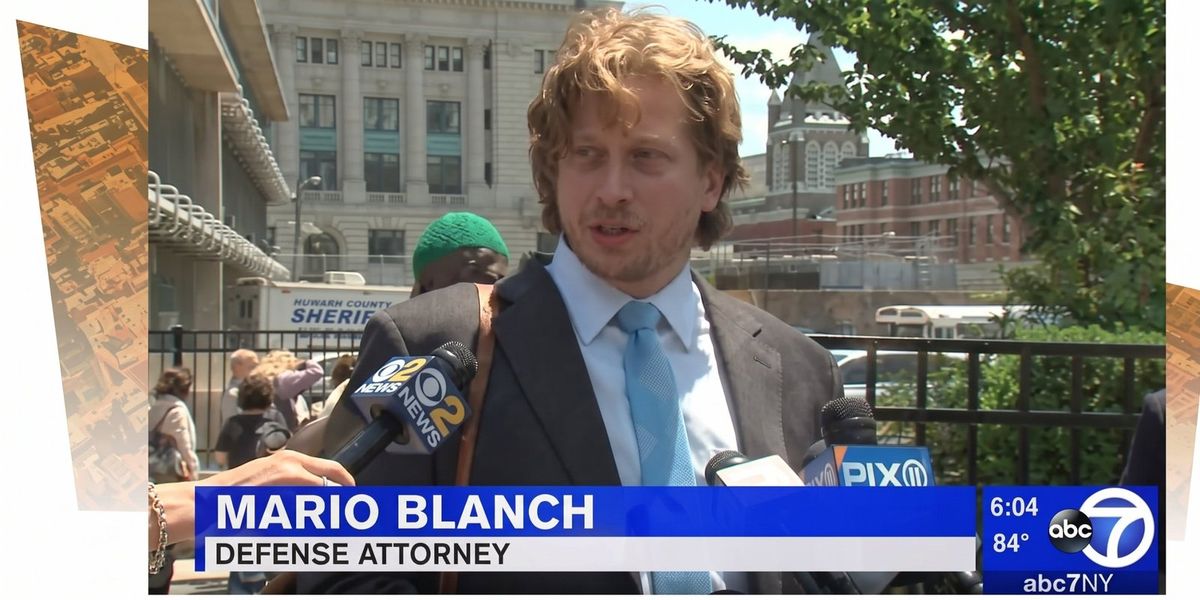
Mario M. Blanch, Esq. leads every case. Depending on the matter, an associate attorney on our team may also work on your case.
I was just arrested. What should I do?+
Stay calm, be polite, and do not discuss the facts with police or anyone else until you have spoken with a lawyer. Keep every paper you were given — the complaint, summons and any court notice — and note your next court date. Then call 1-833-NY-NJ-LAW. This is general information, not legal advice for your situation.
What are the penalties for criminal charges in New Jersey?+
It depends on the degree. In New Jersey, a first-degree crime carries 10 to 20 years in prison and a fine of up to $200,000; second degree, 5 to 10 years and up to $150,000; third degree, 3 to 5 years and up to $15,000; fourth degree, up to 18 months and up to $10,000. A disorderly persons offense carries up to 6 months in jail and a $1,000 fine. First- and second-degree crimes carry a presumption of prison; for a first offense of the third or fourth degree, the law generally presumes a sentence without prison (N.J.S.A. 2C:43-6, 2C:43-3, 2C:44-1).
What is the sentence for murder in New Jersey?+
Murder carries 30 years to life in prison, with at least 30 years served before parole eligibility (N.J.S.A. 2C:11-3). Aggravated manslaughter carries 10 to 30 years, and reckless manslaughter is a second-degree crime (5 to 10 years). Under the No Early Release Act, people convicted of manslaughter and other violent crimes such as aggravated assault, robbery, carjacking, kidnapping and sexual assault must serve 85% of the sentence before parole.
What are the penalties for a first DWI in New Jersey?+
For a first offense with a blood alcohol level of .08% to under .10%: a $250–$400 fine, up to 30 days in jail, 12–48 hours at the Intoxicated Driver Resource Center, and loss of your license until an ignition interlock is installed, then 3 months with the interlock. From .10% to under .15%: a $300–$500 fine and 7 months to 1 year with the interlock. At .15% or higher: a 3-month license forfeiture that runs after the interlock is installed, then 12–15 months with the interlock. Insurance surcharges also apply (N.J.S.A. 39:4-50).
What happens after a temporary restraining order in New Jersey, and how long does a final order last?+
A temporary restraining order (TRO) is followed by a final hearing in the Family Part, usually within about 10 days. If the judge enters a final restraining order (FRO), it has no expiration date — it stays in effect unless a court later dismisses it. An FRO can also affect custody and parenting time, require you to give up firearms, and place your name on a statewide domestic violence registry. Speak with a lawyer before the hearing.
How is property divided in a New Jersey divorce?+
New Jersey uses equitable distribution, which means a fair division — not automatically 50/50. Property acquired by either spouse during the marriage is generally subject to division no matter whose name is on it, while property received as a gift or inheritance (other than from the spouse) is generally excluded. The court presumes each spouse made a substantial financial or non-financial contribution and weighs 16 factors in N.J.S.A. 2A:34-23.1, including the length of the marriage, each spouse's income and earning capacity, contributions as a homemaker, debts, and the needs of the parent with custody to stay in the home.
How do New Jersey courts decide child custody?+
Courts decide custody based on the best interests of the child under N.J.S.A. 9:2-4. Since a January 20, 2026 amendment, the child's safety is a threshold question. The judge also weighs factors such as the parents' ability to communicate and cooperate, any history of domestic violence, the child's relationship with each parent, the child's needs and education, the stability of each home, the child's preference when old enough, and how close the parents live. Courts can order joint or sole legal and physical custody.
How is alimony decided in New Jersey?+
There is no formula. Under N.J.S.A. 2A:34-23, a judge weighs factors such as each spouse's need and ability to pay, the length of the marriage, the standard of living and earning capacities. There are four types: open durational, limited duration, rehabilitative and reimbursement alimony. For marriages under 20 years, limited duration alimony generally cannot last longer than the marriage, unless exceptional circumstances exist.
When does child support end in New Jersey?+
Child support is set using the New Jersey Child Support Guidelines. It generally ends automatically when the child turns 19, unless a court extends it — for example, for a child still in high school or college — and in most cases it ends no later than age 23 (N.J.S.A. 2A:17-56.67).
What are the penalties for a first DWI in New York?+
A first DWI under VTL § 1192(2) (a BAC of .08% or more) or § 1192(3) (intoxicated) is a misdemeanor: a $500–$1,000 fine plus a mandatory surcharge, up to one year in jail, and a license revocation of at least six months (VTL § 1193). The court must also order an ignition interlock device, generally for at least 12 months (VTL § 1198). Aggravated DWI — a BAC of .18% or more — carries a $1,000–$2,500 fine and at least a one-year revocation. The DMV adds a Driver Responsibility Assessment of $250 a year for three years (VTL § 1199), and since February 16, 2026, an alcohol- or drug-related conviction also puts 11 points on a New York driving record. See New York DWI defense.
What is the difference between DWI and DWAI in New York?+
DWAI under VTL § 1192(1) means alcohol impaired your ability to drive to any extent. It is a traffic infraction, not a crime: a $300–$500 fine, up to 15 days in jail and a 90-day license suspension. DWI means you were intoxicated or had a BAC of .08% or more, and it is a misdemeanor. A breath result from .07% to under .08% is evidence of DWAI (VTL § 1195). A second DWAI within five years brings a $500–$750 fine, up to 30 days in jail and at least a six-month revocation, and a DWAI after two prior alcohol-related convictions within 10 years is a misdemeanor.
Can a New York DWI be reduced to a DWAI or a non-alcohol ticket?+
Many DWI cases are resolved as a DWAI, but New York limits plea bargaining. Under VTL § 1192(10), when the charge is DWI, any guilty plea must include at least one of the drunk- or drugged-driving offenses in § 1192 — so the case generally cannot be pleaded down to reckless driving or a non-alcohol traffic ticket unless the district attorney concludes the § 1192 charge is not warranted and the judge states the reason on the record. The strength of the plea offer usually depends on the weaknesses the defense finds in the stop, the arrest, the field sobriety tests and the breath test.
Will my license be suspended right away after a New York DWI arrest?+
Often, yes. If a chemical test shows a BAC of .08% or more, the judge must suspend your license at arraignment while the case is pending (VTL § 1193(2)(e)(7)). The judge can grant a narrow hardship privilege — to drive to work, to necessary medical treatment for you or a household member, or to school — if you prove extreme hardship with more than your own testimony. After 30 days, you may qualify for a conditional license through the DMV's Impaired Driver Program, which also allows limited driving after a conviction for eligible drivers. A conditional license is not valid for commercial vehicles.
What happens if I refuse a breath test in New York?+
Under VTL § 1194, your license is suspended at arraignment and the DMV holds a refusal hearing. If the refusal is upheld, the license is revoked for at least one year (at least 18 months if you had a DWI-related charge or another refusal in the past five years, or if you hold a commercial license), with a $500 civil penalty ($750 for a repeat refusal) and the $750 Driver Responsibility Assessment. The refusal revocation is separate from any revocation for a DWI conviction, and if proper warnings were given, the prosecutor can tell the jury you refused.
When is a DWI a felony in New York?+
A DWI within 10 years of a prior DWI conviction is a class E felony — up to 4 years in prison and a $1,000–$5,000 fine — and a third within 10 years is a class D felony, with up to 7 years and a $2,000–$10,000 fine (VTL § 1193(1)(c)). Under Leandra's Law, driving while intoxicated or impaired by drugs with a child 15 or younger in the vehicle is a class E felony even on a first offense (VTL § 1192(2-a)(b)). A crash causing serious injury or death can also bring vehicular assault or vehicular manslaughter charges. See vehicular assault.
I live in New Jersey and was arrested for DWI in New York. What happens to my license?+
New York cannot suspend a New Jersey license, but it will revoke your privilege to drive in New York, and the DMV still bills the Driver Responsibility Assessment to out-of-state drivers. New York reports the conviction to New Jersey under the Driver License Compact (N.J.S.A. 39:5D-1), and New Jersey can then impose its own suspension. The case stays in the New York court where you were charged, so it should be handled by a lawyer licensed in New York. See New Jersey residents arrested in New York.
What are the penalties for crimes in New York?+
New York grades offenses as felonies (classes A through E), misdemeanors (classes A and B) and violations. A class A misdemeanor carries up to 364 days in jail, a class B misdemeanor up to 3 months, and a violation up to 15 days — a violation is not a crime (Penal Law § 70.15). Violent felonies carry fixed prison terms: 5 to 25 years for class B, 3½ to 15 for class C, 2 to 7 for class D and 1½ to 4 for class E, plus post-release supervision (Penal Law § 70.02). Murder in the second degree carries 15 to 25 years to life (Penal Law § 70.00). Probation is possible for many non-violent felonies. See New York criminal defense.
Will I have to post bail in New York?+
For most misdemeanors and non-violent felonies, no. The judge must release you on your own recognizance or, if needed to make sure you return to court, under non-monetary conditions such as supervised release (CPL 510.10). Bail or jail can be ordered only for "qualifying offenses" listed in the statute — such as most violent felonies, many domestic violence and sex offenses, and certain new charges while another case is pending — and the judge must consider your ability to pay. A temporary order of protection is often issued at arraignment. See arraignment, bail and desk appearance tickets.
Does a felony case go to a grand jury in New York?+
Yes. A felony must be indicted by a grand jury unless you waive indictment and agree to proceed by a superior court information. You have the right to testify before the grand jury if you give timely notice (CPL 190.50), which is an important strategic decision to make with your lawyer. If you are held in jail on a felony complaint and there is no preliminary hearing or grand jury action within 120 hours of arrest (144 hours if a weekend or holiday falls in that time), you generally must be released (CPL 180.80). See grand jury defense.
How long does the prosecution have to be ready for trial in New York?+
Under CPL 30.30, the prosecution must be ready for trial within six months when a felony is charged, 90 days for a class A misdemeanor, 60 days for a class B misdemeanor and 30 days for a violation, not counting certain delays. Before it can declare readiness, the prosecution must turn over discovery and certify that it has done so (CPL 245.50). Amendments effective August 7, 2025 changed how courts judge that certificate and generally require challenges to be raised within 35 days. See discovery and speedy trial.
What is an ACD in New York?+
An adjournment in contemplation of dismissal (CPL 170.55) puts a case on hold — usually for six months, or one year in a family offense case. If the case is not restored to the calendar in that time, it is dismissed and the record is sealed. An ACD is not a conviction or an admission of guilt, and the court can attach conditions such as community service or a program. See ACD and diversion.
Can I seal a criminal record in New York?+
Often, yes. Under the Clean Slate Act (CPL 160.57), most New York convictions are sealed automatically three years after sentencing or release for a misdemeanor and eight years for a felony, if you have no new conviction, no pending charge and are not on probation or parole; sex offenses and most class A felonies are excluded, and the courts have until November 16, 2027 to finish sealing older records. You can also ask a judge to seal up to two convictions (no more than one felony) 10 years after sentencing or release (CPL 160.59). Dismissed cases are sealed automatically. See sealing and the Clean Slate Act.
What is the statute of limitations for crimes in New York?+
Under CPL 30.10, there is no time limit for class A felonies such as murder, and longer periods apply to many sex offenses. Prosecution for most other felonies must begin within five years, for misdemeanors within two years, and for violations and traffic infractions within one year. Time when the accused was continuously outside New York — for example, living in New Jersey — or could not be found may not count, but that can extend the period by no more than five years.
What is youthful offender status in New York?+
If you were under 19 at the time of the offense, the judge can replace a conviction with a youthful offender finding (CPL 720.20). A youthful offender adjudication is not a criminal conviction, the record is sealed, and the sentence for a felony is capped at an indeterminate term of up to four years. Some serious charges, such as class A felonies, are excluded or need special findings. See youthful offender and Raise the Age.
I live in New Jersey. Do I have to go to court in New York?+
Generally, yes. A New York case stays in the New York court where you were charged, and missing a court date can lead to a bench warrant and a new charge. In some misdemeanor and traffic matters, the court may let your lawyer appear for you. Mario M. Blanch, Esq. is licensed in New York and New Jersey, so one attorney can handle the New York case and explain how it affects your New Jersey record and license. Call 1-833-NY-NJ-LAW. See New Jersey residents arrested in New York.
General information only, not legal advice. Every case is different, and laws change — figures reflect New Jersey and New York statutes as of November 2026.